How Your Brain Learns Patterns
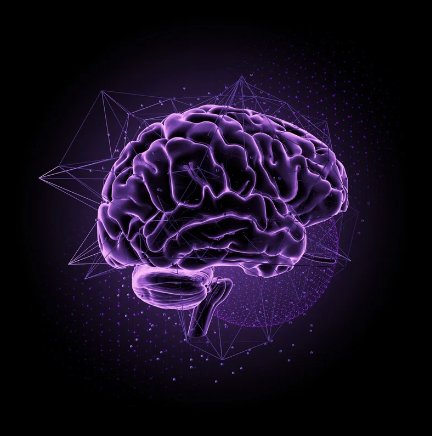
/One of the most compelling ideas in The Brain That Heals Itself is competitive plasticity, the understanding that the brain is constantly reorganizing itself based on what it experiences most often. Early in life, the nervous system is highly adaptable, rapidly building maps of the body and the world. These early maps may begin crude and imprecise, but with consistent, clear input, they become refined and efficient. Once established, those refined maps tend to persist. This is why early patterns such as postural, neurological, and behavioral can be easier to form and much harder to undo later. The brain isn’t resistant to change; it simply prioritizes efficiency and familiarity.
Neuroscientist Donald Hebb captured this process in 1949 with the principle often summarized as “neurons that fire together, wire together.” When specific nerve pathways are activated repeatedly and in coordination, their connections strengthen. Over time, these pathways outcompete others for influence in the brain. The opposite is also true: pathways that aren’t used consistently begin to lose synchronization and fade. Chiropractic care aligns with this neurological principle by helping reduce interference which improves the quality of information traveling between the brain and body. Clearer input gives more adaptive patterns the chance to fire, wire, and take precedence.
The book also emphasizes that plasticity depends not just on repetition, but on organization. When stimulation becomes chaotic, what the author refers to as “noise”, the nervous system loses clarity. Input that activates many neurons at once without precision overwhelms the system rather than refining it. Chiropractic does not add stimulation for stimulation’s sake. Instead, it supports order and coordination within the nervous system, helping the brain receive information that is more meaningful, specific, and easier to integrate.
Perhaps the most important takeaway is that plasticity never happens in isolation. When one part of the nervous system adapts, other systems change alongside it. This is why real change takes time, consistency, and connection. Chiropractic works with the nervous system as an integrated whole, respecting its need for repeated, clear signals over time. Rather than forcing outcomes, chiropractic supports the brain’s innate ability to reorganize itself; allowing new, more adaptive patterns to emerge and become the new normal.
HOW THE BRAIN PROTECTS ITSELF
A key driver of brain plasticity is BDNF (brain-derived neurotrophic factor), often described as “fertilizer” for the nervous system. It plays a crucial role in brain plasticity by supporting the growth and refinement of neural connections, especially during early “critical periods” of development. These windows rely on the nervous system receiving clear, organized input. When stimulation becomes excessive or chaotic, the brain may respond protectively by narrowing or shutting down these periods of heightened adaptability.
This concept is discussed in depth in relation to nervous system overload in autism, where overwhelming input can interfere with the brain’s ability to refine its internal maps. With consistent, specific input over time, chiropractic supports a more organized nervous system.
Doidge Norman. The Brain That Heals Itself: Remarkable Discoveries and Recoveries from the Frontiers of Neuroplasticity., Chapter 3. 2007.